Neural Input Gaming 2025: How Brain-Computer Interfaces Are Redefining Player Control
Gaming has always evolved alongside human imagination. From arcade joysticks to touchscreens, motion sensors, and virtual reality headsets, each leap in technology has brought players closer to the worlds they explore. In 2025, a new frontier is emerging that promises to redefine how humans interact with digital environments entirely. This frontier is Neural Input Gaming—a revolutionary approach that allows players to control games directly using brain signals rather than physical devices.
As processing power accelerates and artificial intelligence becomes more adaptive, Neural Input Gaming is no longer a distant sci-fi concept. It is a rapidly developing reality that blends neuroscience, AI, and next-generation gaming hardware. This shift has the potential to transform immersion, accessibility, competitive play, and even how games are designed from the ground up.
Table of Contents
What Is Neural Input Gaming?
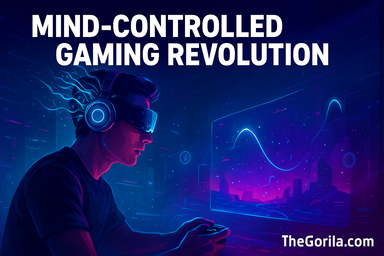
At its core, Neural Input Gaming refers to gameplay systems that interpret brain activity and convert it into in-game actions. Instead of pressing buttons or moving analog sticks, players generate commands through focused thought, intention, or emotional states.
These systems rely on brain-computer interfaces (BCIs)—devices that detect neural signals and translate them into digital inputs. While early BCIs were primarily used in medical and research settings, advancements in wearable sensors and machine learning have made consumer-grade applications increasingly viable.
What makes Neural Input Gaming significant is not just novelty. It represents a fundamental change in player control, eliminating the mechanical barrier between intention and action. The result is a more fluid, responsive, and deeply immersive experience.
Why 2025 Is a Turning Point for Neural Input Gaming
Several technological breakthroughs have converged to make 2025 a defining year:
- AI-driven signal interpretation has dramatically improved accuracy
- Wearable EEG hardware is becoming smaller, wireless, and affordable
- Ultra-fast processing systems reduce input latency to near-instant levels
- Game engines now support real-time adaptive environments
This evolution mirrors broader innovations in gaming hardware. As explored in quantum console gaming, next-generation processing power enables real-time computation at unprecedented speeds—an essential requirement for translating neural signals into seamless gameplay.
Understanding Brain-Computer Interfaces in Gaming
How Brain Signals Become Game Controls
Brain-computer interfaces work by detecting electrical activity produced by neurons in the brain. Most gaming-focused BCIs use electroencephalography (EEG) sensors that sit on the scalp and read patterns associated with concentration, intention, or emotional responses.
These raw signals are processed by AI models trained to recognize specific neural patterns. For example:
- Sustained focus may trigger character movement
- Sudden intent could initiate an action
- Emotional arousal may alter gameplay intensity
According to academic research on brain-computer interfaces used in video games, modern BCIs can already translate neural signals into reliable digital commands, validating the scientific foundation behind Neural Input Gaming.
From Medical Innovation to Entertainment Revolution
BCI technology was originally developed to help patients regain communication or mobility after neurological injuries. Over time, researchers realized that the same technology could be adapted for entertainment, training, and simulation.
Gaming became a natural testing ground because it demands real-time feedback, precision, and engagement. Neural Input Gaming is now benefiting from decades of medical research combined with consumer-level innovation.
Neural Input Gaming vs Traditional Controllers
Traditional controllers rely on physical movement—hands, fingers, and reaction speed. Neural Input Gaming replaces or augments these inputs with cognitive signals.
Key differences include:
- Speed: Neural commands bypass physical delay
- Immersion: Thought-driven actions feel more natural
- Learning curve: Mental calibration replaces muscle memory
- Accessibility: Hands-free control opens gaming to new audiences
Rather than fully replacing controllers, many developers envision hybrid systems where neural input enhances traditional gameplay mechanics.
AI, Simulation, and Real-Time Adaptation
Artificial intelligence is the invisible engine behind Neural Input Gaming. AI models interpret neural data, filter noise, and continuously adapt to each player’s unique brain patterns.
This adaptive process resembles how digital twin technology creates real-time virtual replicas that respond instantly to real-world inputs. In gaming, AI-driven neural models act as a cognitive mirror, evolving alongside the player’s mental state.
The result is gameplay that feels personal, responsive, and alive—no two players experience the same interaction.
Customization and Player Freedom in Neural Input Gaming
One of the most exciting aspects of Neural Input Gaming is the unprecedented level of customization it enables. Instead of configuring controls through menus, players train the system to respond to their thoughts and emotions.
Gamers who love customizing gameplay through modifications—much like players who enjoy the best Sims 4 mods in 2025—will soon be able to customize entire neural-driven worlds where environments react instantly to focus, stress, or excitement.
Possible customization features include:
- Emotion-responsive environments
- Adaptive difficulty based on mental fatigue
- Personalized control mappings
- Thought-triggered abilities
This marks a shift from static game design to living, responsive systems.
Accessibility: A Game-Changer for Inclusive Play
Perhaps the most powerful impact of Neural Input Gaming lies in accessibility. For players with limited mobility, traditional controllers can be a barrier. Neural input offers a hands-free alternative that enables participation without physical strain.
This technology opens gaming to:
- Players with motor impairments
- Individuals with temporary injuries
- Neurodivergent gamers seeking alternative interaction methods
By prioritizing inclusive design, Neural Input Gaming expands the gaming community and reshapes how accessibility is approached across the industry.
Neural Input Gaming and Competitive Esports
Competitive gaming thrives on precision, reaction speed, and consistency. Neural Input Gaming introduces a new dimension to esports by reducing physical latency and emphasizing cognitive performance.
However, it also raises important questions:
- How do you ensure fair competition?
- Can neural calibration become a skill advantage?
- How do leagues regulate brain-based input systems?
While widespread esports adoption may take time, early experiments suggest that Neural Input Gaming could redefine what skill means in competitive play.
Ethical and Privacy Considerations
Reading brain signals introduces ethical concerns that cannot be ignored. Neural data is deeply personal, and its misuse could have serious consequences.
Key concerns include:
- Data ownership and consent
- Secure storage of neural information
- Psychological fatigue and overstimulation
Developers must prioritize transparency, encryption, and user control to ensure Neural Input Gaming evolves responsibly.
Challenges Slowing Mass Adoption
Despite its promise, Neural Input Gaming still faces hurdles:
- Hardware cost and availability
- Signal accuracy in non-controlled environments
- Learning curves for new users
- Regulatory uncertainty
These challenges are not roadblocks but milestones—similar to the early days of VR and motion gaming.
The Future of Neural Input Gaming Beyond 2025
Looking ahead, Neural Input Gaming will likely evolve into hybrid ecosystems combining neural input, physical controllers, AI companions, and immersive environments.
Future developments may include:
- Neural-driven virtual reality worlds
- Emotion-based storytelling mechanics
- Thought-controlled creative tools
- Seamless integration with next-gen consoles
As processing power and AI intelligence grow, Neural Input Gaming will move from experimental to mainstream.
Conclusion: Thought Is the New Controller
Gaming has always been about expression, challenge, and connection. Neural Input Gaming represents the next evolution—one where thought itself becomes the interface. By merging neuroscience with advanced computing, this technology removes barriers between player and world, creating experiences that feel intuitive, personal, and profoundly immersive.
In 2025, Neural Input Gaming is not just redefining player control—it is redefining what it means to play. As adoption grows, this innovation will shape the future of gaming for decades to come, turning imagination into action at the speed of thought.